
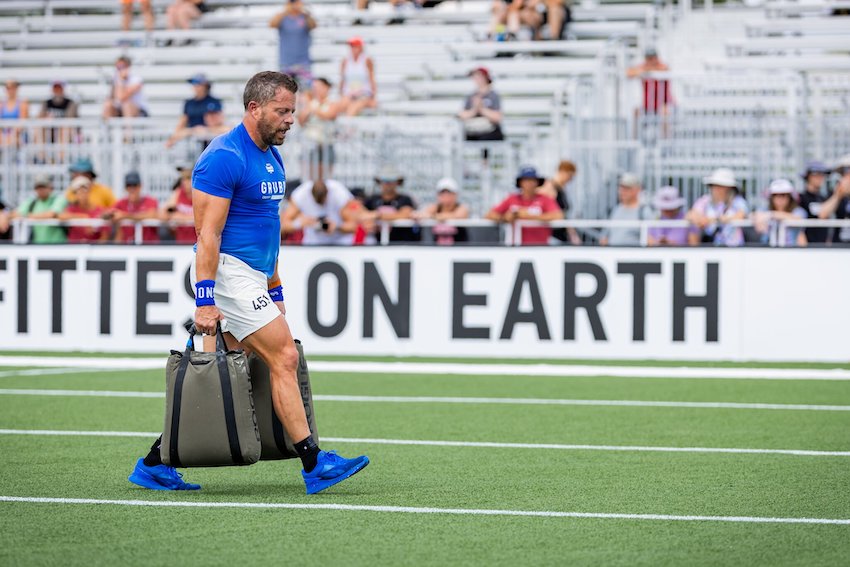
In a recent video, Jason Grubb, a five-time CrossFit Games champion in the Masters division, shared a crucial message for aging athletes: stop training like you’re in your 20s.
Grubb, now 46, emphasized that as athletes age, their approach to training must evolve. Many Masters athletes—typically those over 35—make the mistake of following the same high-volume, high-intensity routines designed for younger competitors. However, without proper adjustments, this can lead to overtraining, poor recovery, and plateaued performance.
Instead, Grubb advocates for a smarter, more intentional approach that prioritizes recovery, strategic volume, and purposeful workouts. His insights stem from years of personal trial and error, ultimately leading him to multiple CrossFit Games championships.
How Jason Grubb Went from Overtraining to Championship Wins
Grubb’s journey into CrossFit began at age 38. Before that, he was a casual jogger with no competitive athletic background. Despite his late start, he quickly excelled in the sport. However, in his early years, he followed high-volume elite programming—the same type used by younger athletes competing at the highest level.
His training sessions lasted three to four hours daily, often without structured warm-ups or recovery protocols. He also wasn’t eating enough to support his workload. As a result, when it came time to compete in the CrossFit Open and age group qualifiers, he consistently fell short of making the Games.
At 41, after yet another disappointing season, he made a pivotal change: he switched to a Masters-specific training program with lower volume and higher intention. The results were immediate.
The Science Behind Smarter Training for Masters Athletes
Grubb’s shift wasn’t just about doing less—it was about training efficiently. His new approach focused on three key principles:
- Reduced volume, increased focus: Instead of hours of grueling workouts, he performed fewer reps with more precision. This led to better movement quality and greater overall gains.
- Prioritizing recovery: With age, recovery takes longer. By training smarter and sleeping better, he saw significant improvements in his strength, endurance, and overall performance.
- Optimized nutrition: He adjusted his diet to match his activity level, ensuring he fueled his workouts properly. Hydration and electrolyte balance also became a priority.
These changes propelled him to his first CrossFit Games in 2018, where he placed third. He continued refining his training, ultimately securing five consecutive championship titles.
The Boulder Athlete Approach: Training with Purpose
Now, as a coach and competitor, Grubb applies these principles to Boulder Athlete, his training program for Masters athletes. A key feature of the program is color-coded workouts, helping athletes understand intensity levels and manage training load effectively:
- Blue – Recovery: Light movement focused on mobility and recovery.
- Green – Zone 2: Steady, manageable effort for building aerobic capacity.
- Yellow – Zone 3: Challenging but sustainable efforts for improving endurance.
- Orange – Zone 4: High-intensity efforts that push limits without overtraining.
- Red – Max effort: All-out sprints requiring proper recovery afterward.
By structuring workouts this way, athletes can train smarter, not harder, optimizing performance while minimizing fatigue and risk of injury.
Key Takeaways for Masters Athletes
Grubb’s experience offers valuable lessons for athletes looking to extend their competitive careers and maximize performance:
- Train for your age—what worked at 25 may not be effective at 40.
- Focus on recovery—overtraining leads to burnout and setbacks.
- Be intentional—each rep and workout should serve a purpose.
- Fuel properly—hydration and nutrition are just as important as training.
- Prioritize longevity—sustainable training leads to long-term success.
By embracing these strategies, Masters athletes can continue competing at a high level without sacrificing health or performance.